
The Pull as a Thread — Hardware Across Three Thresholds
August 28,2026A standalone house is not a single object. It is a sequence of boundaries.
You approach from the street. The building's limestone face sets the first tone — restrained, monolithic, punctuated by dark window recesses. Then you enter the courtyard. Grass and hedges soften the geometry; a glass partition divides the garden from the passage, and on it stands a double-column pull, its marble grip catching daylight.
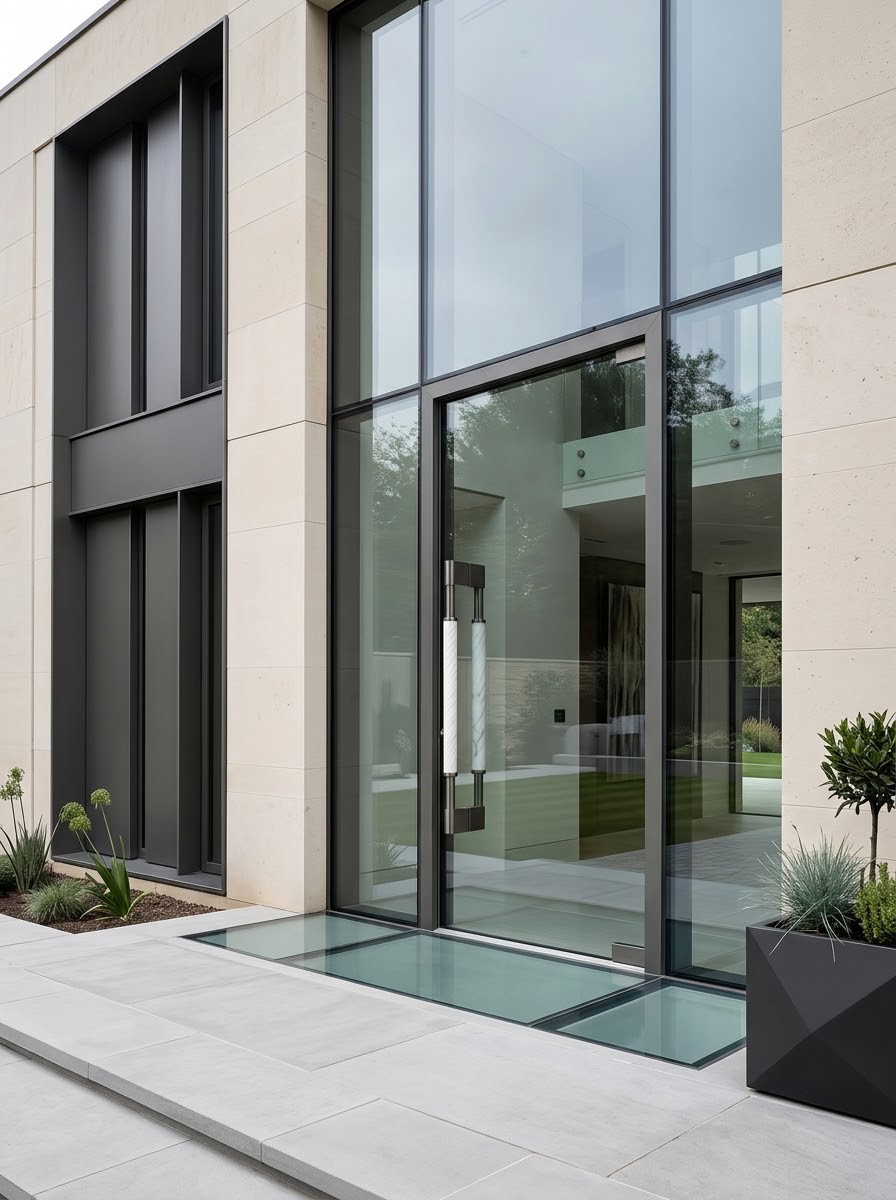
Finally, the entry door. Floor-to-ceiling glass, a gunmetal frame, and the same pull — now facing outward, now the last object before inside.
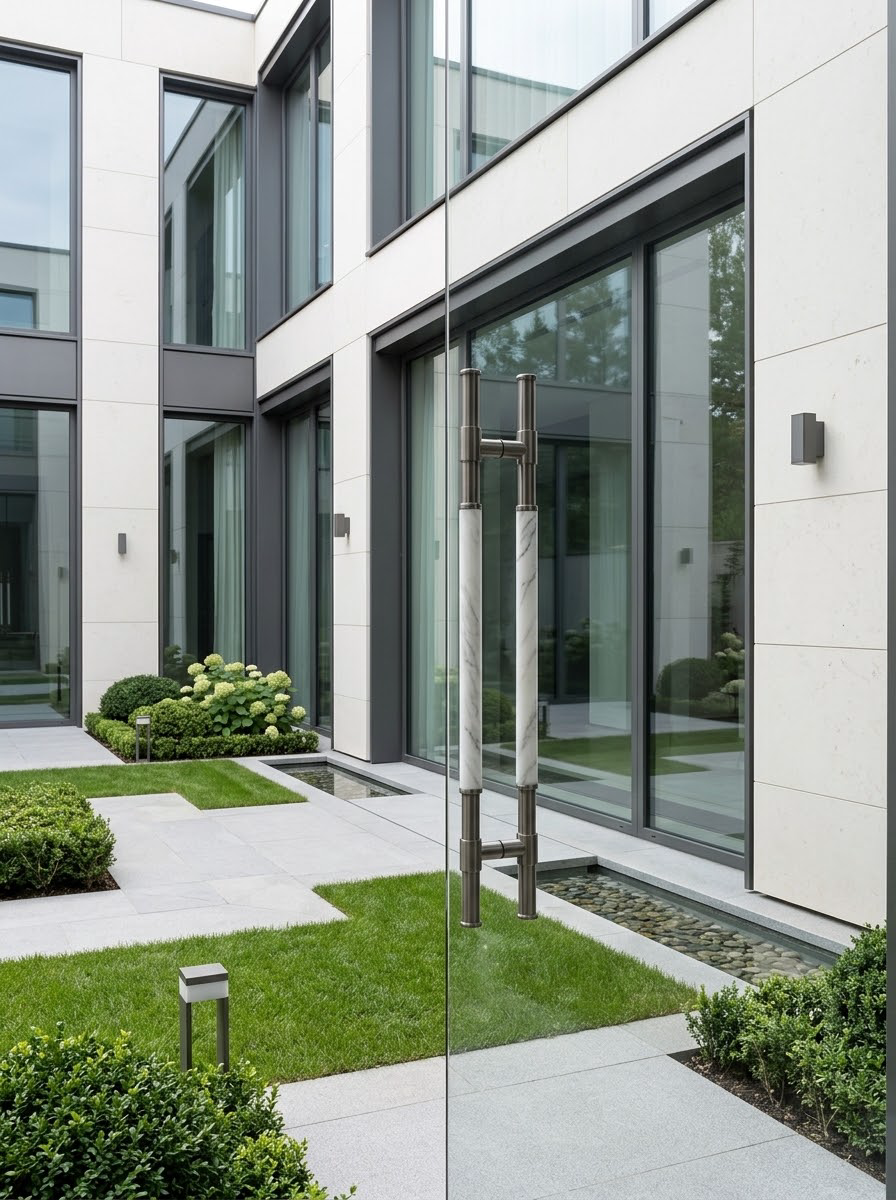
The decision to repeat one hardware type across exterior and semi-exterior conditions is not merely aesthetic consistency. It creates a tactile through-line. A visitor may not consciously register the repetition, but their hand does. The same cool marble, the same gunmetal weight, at two different moments of arrival.
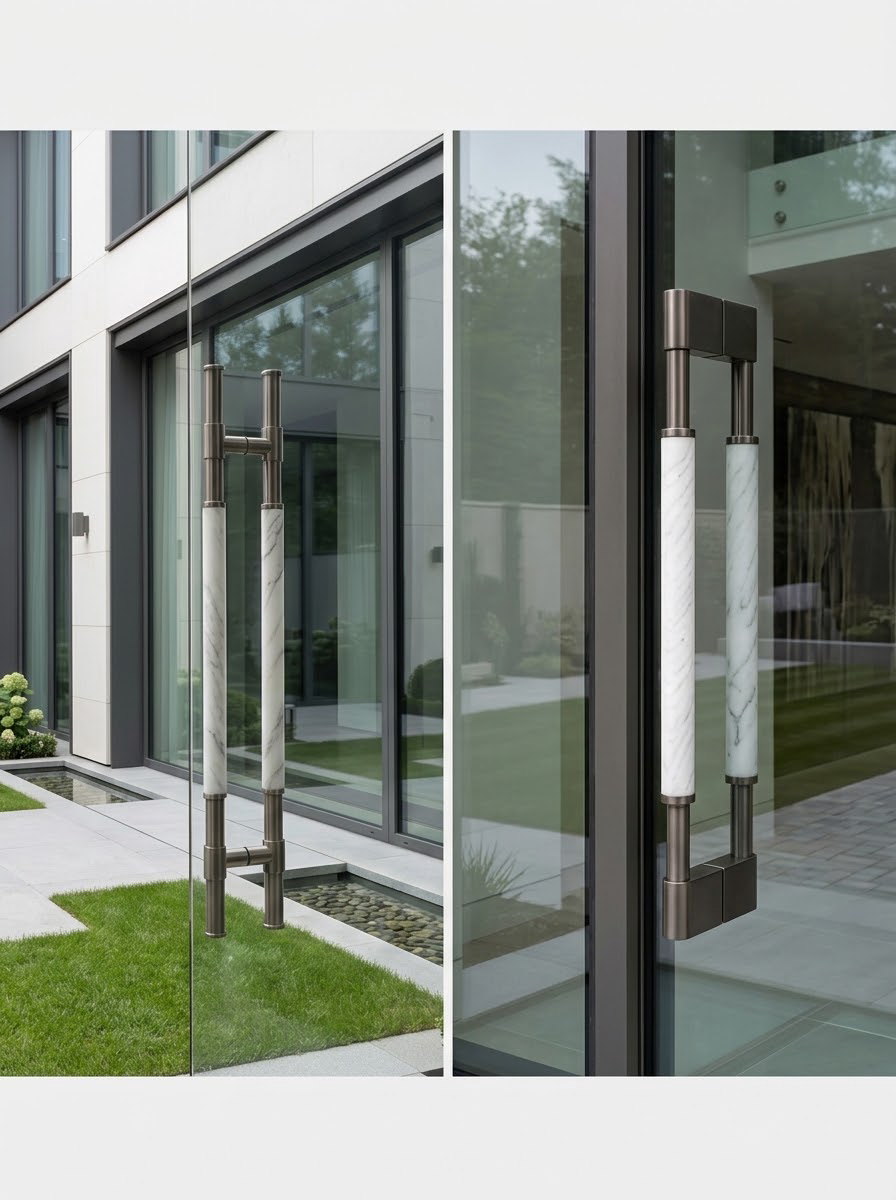
Glass architecture is often praised for dissolving boundaries. But a boundary that dissolves entirely leaves no place for the hand. The pull is what remains — a fixed, human-scale point in a wall of transparency.
It is the smallest element on the facade, and the only one you touch.